- Home
- How it works
How a home leak survey works
Tell ADI what you have noticed. The team will explain the investigation, agree the price and arrange a visit. Here is what happens before, during and after the survey.
Home leak survey steps
-
Step 1: Talk us through the problem
Call with the postcode and what you have noticed: a water bill, a ceiling stain or falling boiler pressure. The office team explains the appropriate investigation, price and availability.
-
Step 2: Arrange access
Make sure the engineer can reach the affected rooms, stopcock, meter and heating controls. For flats or shared supplies, access to a neighbouring property may need arranging too.
-
Step 3: Show the engineer the signs
Point out where the damp first appeared, any recent plumbing work and what changes when you use the water or heating. Photos of an intermittent leak are useful.
-
Step 4: Trace the hidden leak
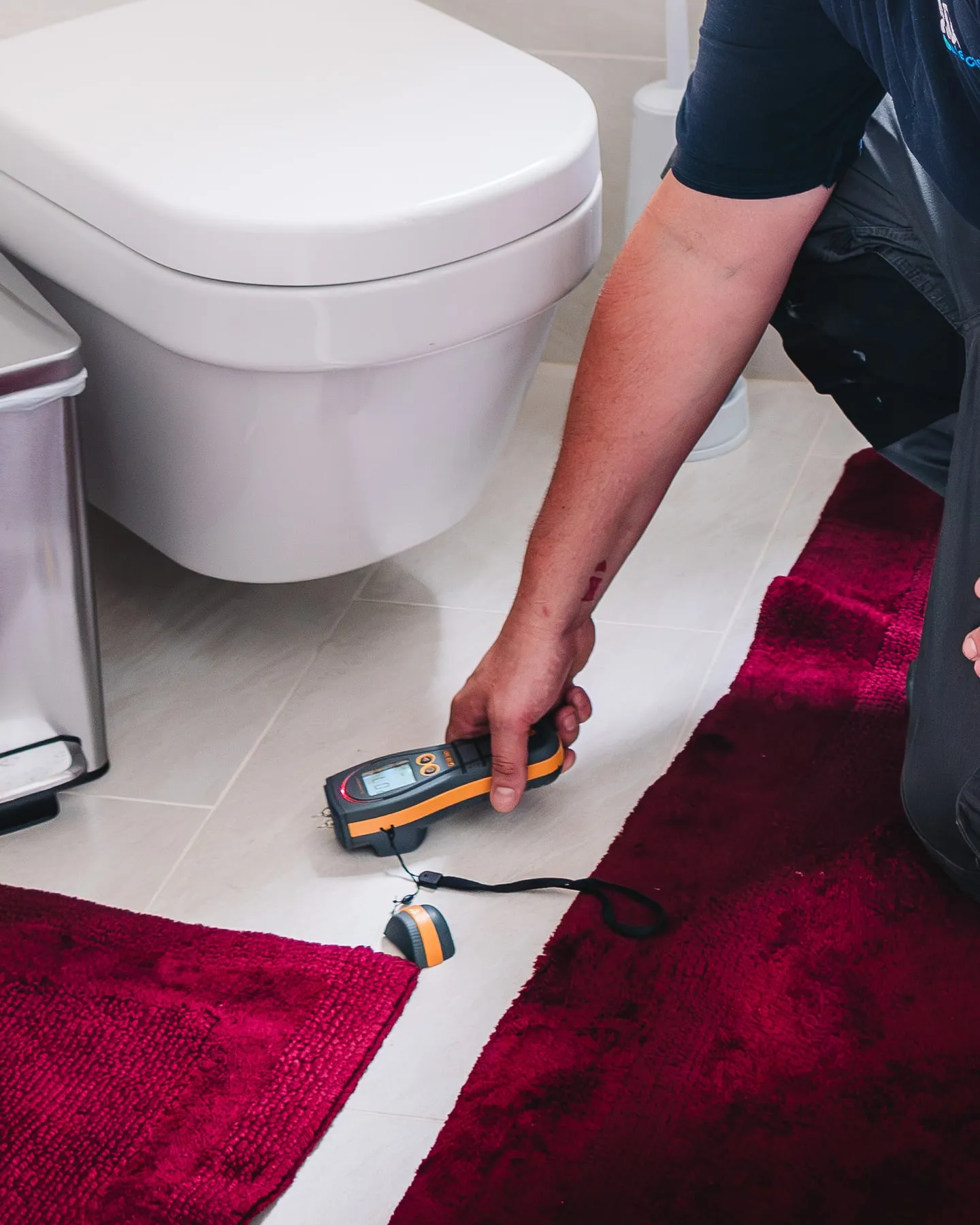
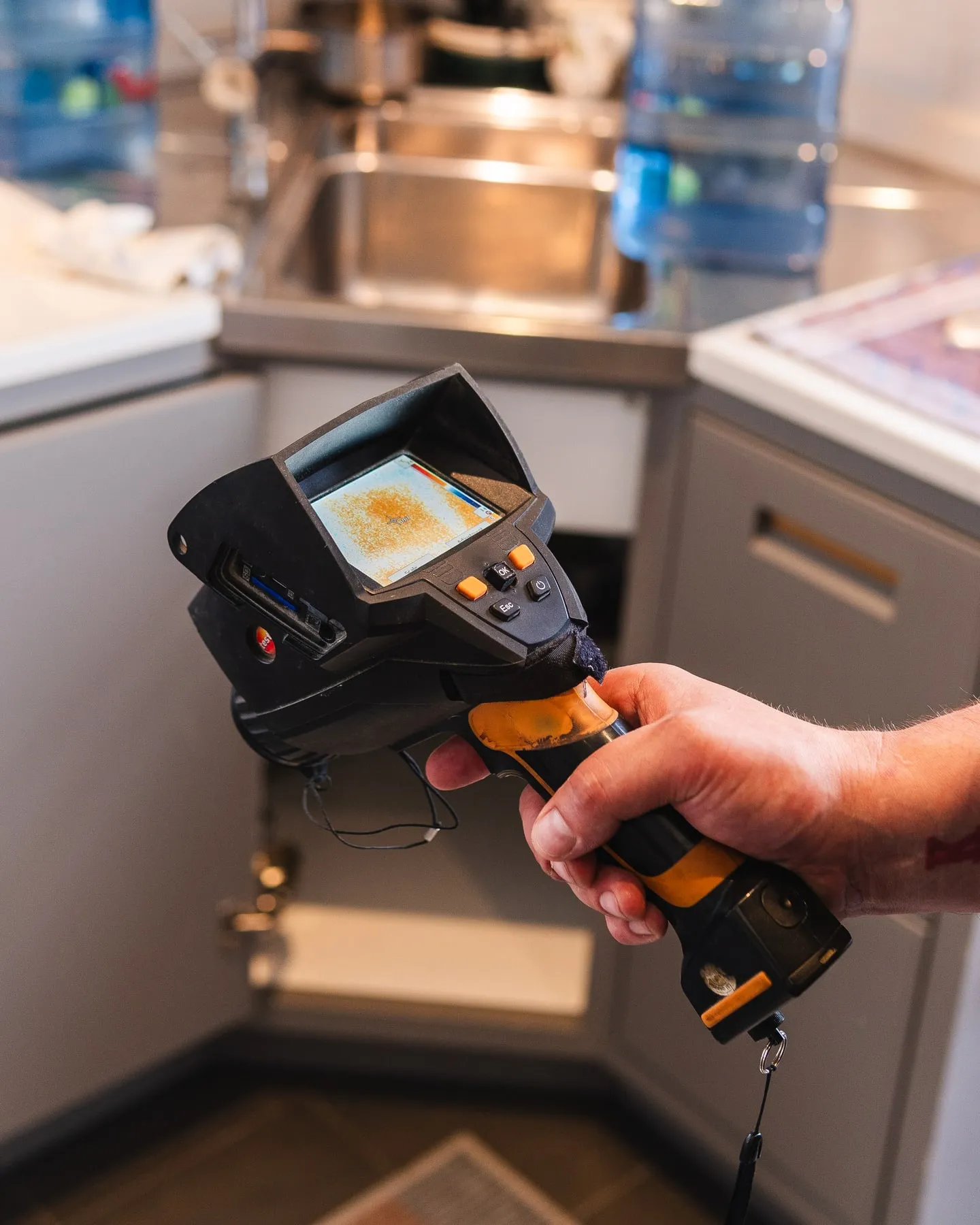
The engineer selects the tests for your property. Pressure testing, thermal imaging, acoustics, tracer gas and camera inspection build up the evidence before opening-up is discussed.
-
Step 5: Get a written report
ADI provides the findings with photographs and recommendations. You can share the report with your insurer, landlord or repair contractor.
-
Step 6: Agree the repair
Suitable pipework repairs can be quoted separately and carried out where practical. Roof and structural faults are reported for a roofer or the relevant trade.
Getting ready for the engineer
Clear access helps the engineer follow the pipework and compare readings across the affected rooms.
- Show where the problem appears. Note when it started, whether it follows rain or using a fixture, and any change in meter readings or boiler pressure.
- Make the key areas accessible. The stopcock, meter, boiler, cylinder, heating manifold and affected rooms may all need checking. Mention locked cupboards or shared areas when booking.
- Arrange access in flats. A neighbouring property or a shared riser may need inspection. Agree this with the landlord or managing agent before the appointment.
- Follow the heating instructions for your booking. Conventional and underfloor systems need different preparation. Tell the office about faults and follow its advice for your system.
- Arrange parking within 100 metres. ADI carries heavy equipment. Parking and toll charges are passed on at cost plus VAT; tell the team about stairs and lift access too.
- Check what your insurer needs. Ask about approval, cover and report requirements before booking. Keep photographs and any earlier repair records to hand.
A report you can act on
The attending engineer records the tests, findings and recommendations in a written report, supported by photographs and video where relevant.
You can share the report with your insurer, landlord or the contractor arranging repairs. It explains what the investigation established. Your insurer decides whether your policy covers the survey, access, repair or resulting damage.
Access and repairs are quoted separately
The detection price covers investigation. Opening a floor or wall to reach a pipe forms part of separately quoted access and repair work. ADI can repair suitable plumbing, heating and water supply leaks, with testing afterwards. Confirm the scope and cost before work begins.
Roofing, structural work, tiling, windows and decoration need the appropriate trade. ADI does not offer boiler repairs or general plumbing. A reported leak location is not a promise that every repair or reinstatement can be completed during the survey visit.
ADI’s domestic “no find, no fee” offer has detailed eligibility conditions and exclusions. Ask the office whether your specific job qualifies and request the full booking terms. Read the booking summary.
Call 0333 567 2630Questions about the visit
Is residential leak detection covered by home insurance?
Some policies include trace and access cover for finding and exposing a hidden leak. Cover, excesses and approval requirements vary. Speak to your insurer before booking. ADI provides a written report with photographs to support your enquiry or claim; your insurer decides what is covered.
Do you repair the leak as well?
Suitable plumbing, heating and supply pipe repairs can be quoted separately after the fault is located. Roof and structural repairs, boiler repairs, tiling and decorating are outside ADI’s repair service. Ask the office about the likely scope for your property.
Can you investigate leaks in flats and rented homes?
Yes. Tell the office if you rent, if a managing agent is involved or if the water supply is shared. Arrange the appropriate booking authority and access beforehand. The engineer may need to enter a neighbouring flat to follow the leak.
Talk to ADI about a leak at home
Tell the team your postcode, the type of property and what you have noticed. They will explain the survey, confirm the price and current appointments, and arrange an engineer.
- Monday to Friday, 7:30am to 6:30pm
- Calls reach ADI Leak Detection’s office in High Wycombe. Engineers cover England, Scotland and Wales.